
How to Send LinkedIn Lead Gen Forms to GetResponse (Step-by-Step)
Send LinkedIn leads to GetResponse automatically. Connect your Page, add your GetResponse key, map fields and test it with LeadsNotify in about 5 minutes.

Table of contents
GetResponse is an email marketing platform with autoresponders, landing pages, webinars and marketing automation. If you run LinkedIn Lead Gen Forms, sending every new lead to GetResponse automatically saves you downloading files from Campaign Manager and importing them by hand.
This guide shows you how to send LinkedIn Lead Gen Forms to GetResponse with LeadsNotify: connect your LinkedIn Page, connect GetResponse, choose where leads go, and test it. It takes about five minutes.
Why Send LinkedIn Leads to GetResponse?
GetResponse autoresponders run on a day-zero schedule: the sooner the contact is added, the sooner the first message goes. Sending ad leads automatically removes the delay.
LinkedIn leads are often your most valuable leads: decision makers, with company and job title already filled in from their profile. They are also the easiest to lose, because they wait in Campaign Manager until someone remembers to download them.
How to Send LinkedIn Lead Gen Forms to GetResponse (About 5 Minutes)
Before you start, you need: a LeadsNotify account on any plan, free included, admin access to the LinkedIn Page that runs your lead gen forms, and your GetResponse account and permission to create API keys.
Step 1: Connect Your LinkedIn Page
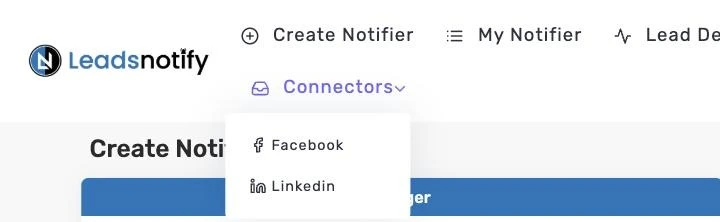
Log in to LeadsNotify. Open Connectors in the top menu and choose Linkedin. Click Connect To Linkedin, sign in, tick the Pages you run lead gen form campaigns from, and approve the permissions LinkedIn asks for.
Every Page you ticked shows as CONNECTED. Adding another Page later? Click Connect To Linkedin again and tick the new Page, leaving the connected Pages ticked. Already connected? Skip to step 2.
Step 2: Create a GetResponse Notifier
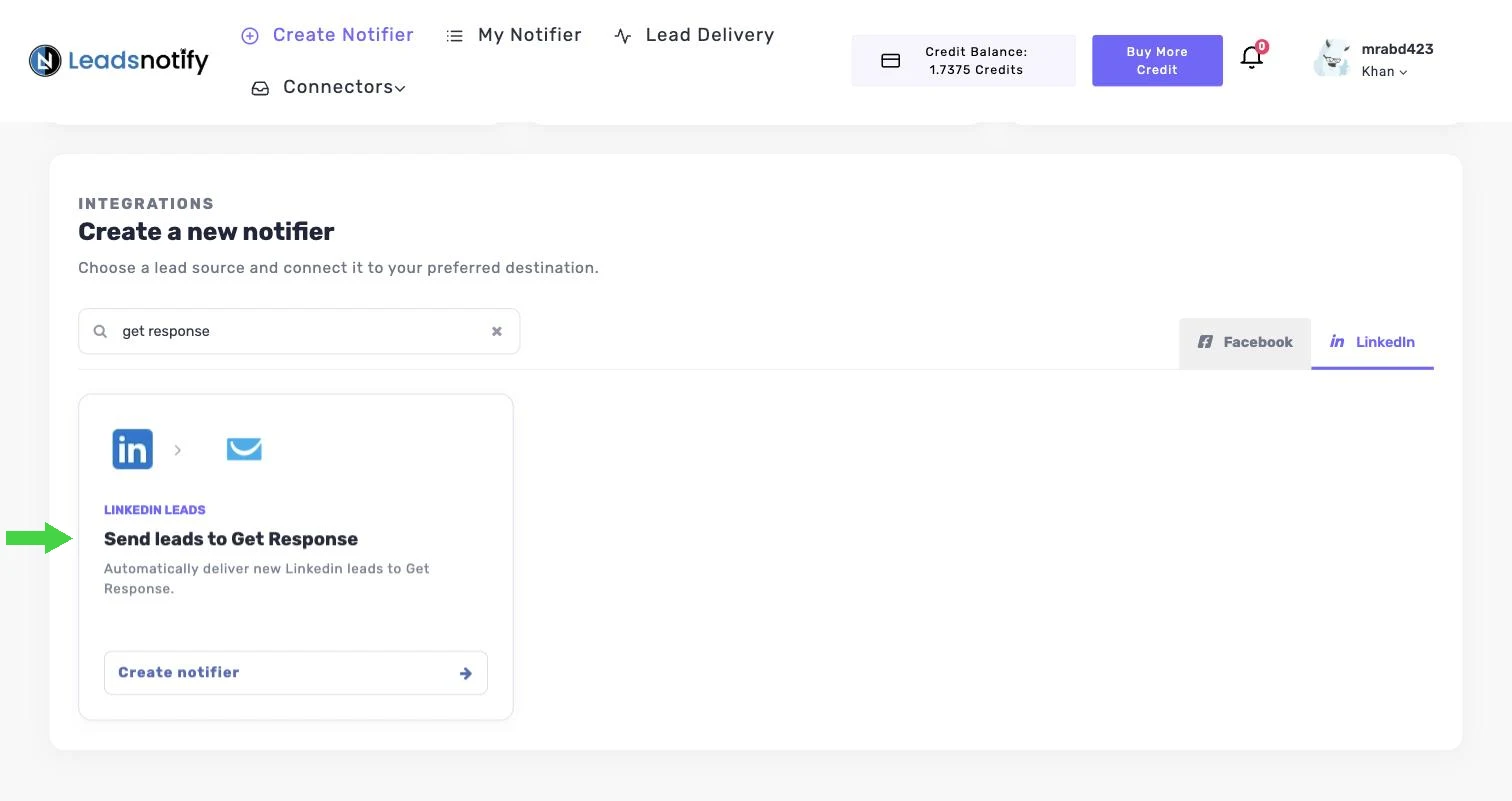
Go back to the dashboard. Under Create a new notifier, make sure the LinkedIn tab is selected, type “getresponse” in the search box, find Send leads to GetResponse and click Create notifier.
Step 3: Pick Your Page and Lead Gen Forms
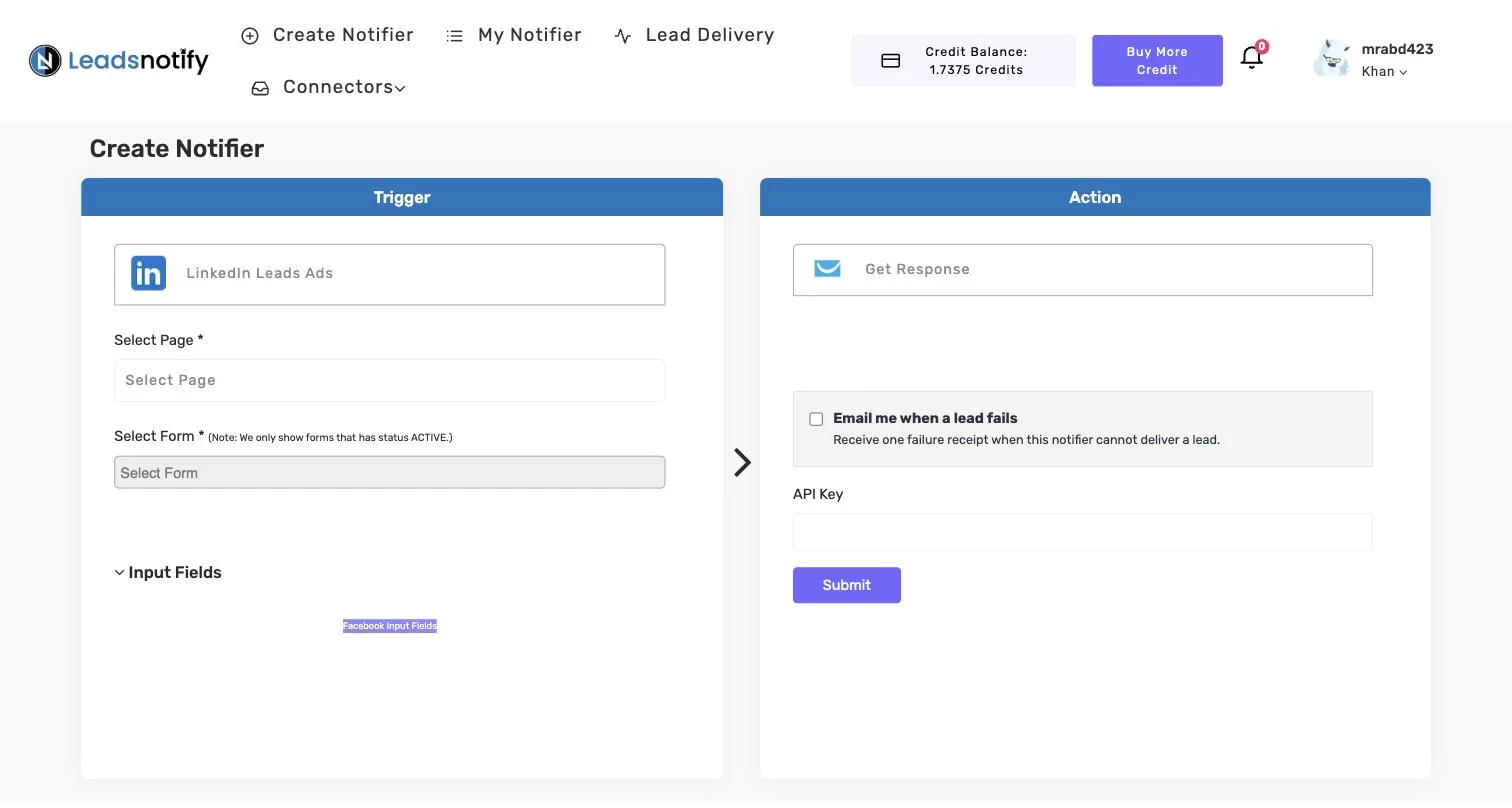
The Create Notifier screen has two sides. The Trigger on the left is where leads come from. The Action on the right is where they go.
In the Trigger panel, choose your LinkedIn Page under Select Page, then pick one or more lead gen forms under Select Form. LeadsNotify then lists the fields on those forms, such as first name, last name, email, company name and job title.
Only active forms are shown. If a form is missing, check that the form and its campaign are active in Campaign Manager.
Step 4: Connect GetResponse
The Action panel asks for your GetResponse API Key. These let LeadsNotify add leads to your GetResponse account.
Where to find your GetResponse API Key
- Log in to GetResponse.
- Go to Tools > Integrations and API and open the API tab.
- Click Generate API key, give it a name such as LeadsNotify, and copy it.
GetResponse only shows the full key when you create it, so paste it into LeadsNotify straight away. Unused keys expire after 90 days.
Paste the value into LeadsNotify and click Submit.
Step 5: Choose Where Leads Go, Then Submit
After you click Submit, LeadsNotify loads your GetResponse lists (GetResponse calls them lists or campaigns). Choose where new leads go, then match the form fields to GetResponse fields.
Tick Email me when a lead fails so you hear about it if a lead can’t be delivered, then click Submit. Your notifier appears under My Notifier, and the green switch means it’s live.
Step 6: Send a Test Lead and Check Lead Delivery
After you submit the notifier, LeadsNotify offers to send a test lead through it. You can also do this later: open My Notifier, click Edit on the notifier, then click TEST NOTIFIER.
Open Contacts in GetResponse and filter by the list you chose. If the test lead is there with the right details, the notifier is working.
Want to test with a submission from LinkedIn itself? In Campaign Manager, open your ad account, go to Content & Assets > Lead generation forms, click More next to the form and choose Send Test Lead. Use a real email address you own.
Then open Lead Delivery in LeadsNotify. Every attempt is listed with the Page, the form, the destination and a status of Delivered or Failed, and the Response column shows the exact reply from GetResponse. Our guide to the lead delivery status dashboard walks through every column.

Tips for Getting More From LinkedIn Leads in GetResponse
- If the list uses double opt-in, the contact appears once they confirm. Check the list settings before testing.
Troubleshooting the LinkedIn Lead Gen Forms to GetResponse Integration
Start with the Response column in Lead Delivery. It shows the exact reason GetResponse gave for a failed lead.
| What you see | Likely cause | Fix |
|---|---|---|
| No leads arriving at all | The LinkedIn Page shows DISCONNECTED, often after an admin role changes | Connectors > Linkedin > Connect To Linkedin, and tick the Page again |
| Your form isn’t in Select Form | Only active forms are shown | Check the form and campaign status in Campaign Manager, then reopen the notifier |
| Leads stopped after you edited the campaign | The campaign now uses a different lead gen form | Edit the notifier and select the new form |
| Contact missing after the test | Double opt-in is on for the list | Confirm from the test inbox, or change the list setting |
| A delivery shows Failed | GetResponse refused the lead | Open Lead Delivery and read the Response column for the reason |
Frequently Asked Questions
How do I connect LinkedIn Lead Gen Forms to GetResponse?
Use LeadsNotify. Connect your LinkedIn Page, create a GetResponse notifier, pick your lead gen forms, enter your GetResponse API Key, then submit and send a test lead.
Can LinkedIn leads go to GetResponse automatically?
Yes. Once the notifier is switched on, every new lead from the forms you picked is sent to GetResponse within seconds, with no CSV downloads.
Do I need to write any code?
No. Everything is set up in the LeadsNotify screens. You only need access to your LinkedIn Page and to your GetResponse account.
Can I send the same lead to GetResponse and another tool?
Yes. Create a second notifier on the same form, for example email alerts or Slack. See every LinkedIn Lead Gen Forms to GetResponse option on our integrations page.
What happens if a lead can’t be delivered?
Tick Email me when a lead fails on the notifier and LeadsNotify emails you when GetResponse refuses a lead. The Response column in Lead Delivery shows the reason. Here’s more on lead failure email alerts.
Which LeadsNotify plans include it?
Every plan, the free plan included. The free plan covers 150 leads a month and 2 notifiers. Compare the plans.
Start Sending LinkedIn Leads to GetResponse
Connect your LinkedIn Page, connect GetResponse, pick your forms and click Submit. Your next lead lands in GetResponse seconds after the form is sent, instead of waiting for a download. Create your free LeadsNotify account and set up your GetResponse notifier today.
Running Facebook lead ads too? Here’s how to send Facebook leads to GetResponse.
Last Updated on September 25, 2026 by Akash Mehra
Set up a free notification in a few minutes.

Hizqeel Nizamani
Hizqeel Nizamani is a software engineer and backend developer working on CRM integrations, automation, APIs, and lead management systems. At LeadsNotify, he helps build and improve technology that enables businesses to capture, manage, and respond to leads more effectively.
Connect on LinkedIn ↗