
How to Connect LinkedIn Leads with Capsule CRM
Connecting Capsule CRM with LinkedIn lead generation can help you move new leads into your CRM automatically instead of manually copying contact information from LinkedIn. With LeadsNotify, you can create an automation that sends leads from LinkedIn Lead Gen Forms directly to…

Table of contents
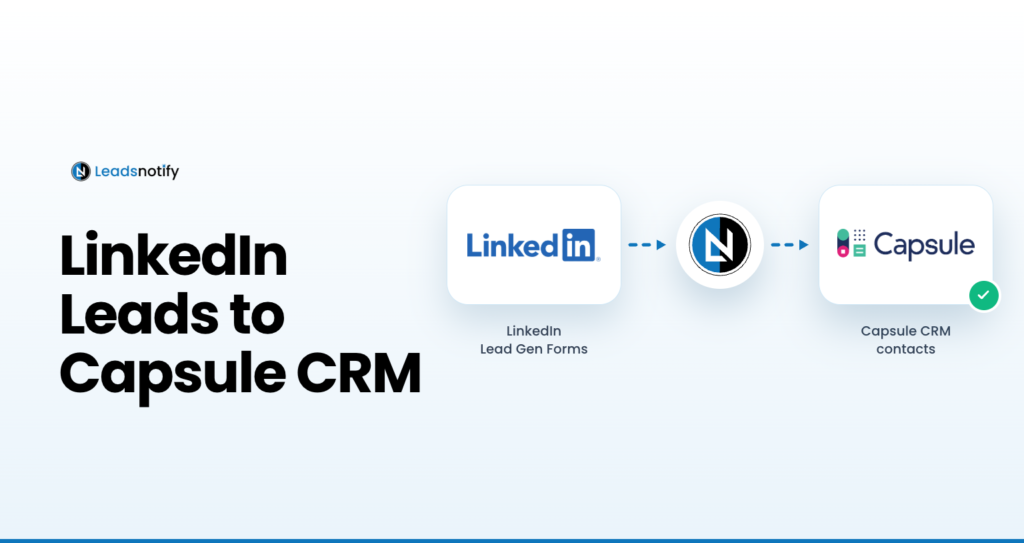
Connecting Capsule CRM with LinkedIn lead generation can help you move new leads into your CRM automatically instead of manually copying contact information from LinkedIn. With LeadsNotify, you can create an automation that sends leads from LinkedIn Lead Gen Forms directly to Capsule CRM.
This guide explains how to connect LinkedIn leads with Capsule CRM using LeadsNotify, connect your LinkedIn lead forms, configure the integration, and test the automation to make sure your leads are reaching Capsule CRM correctly.
If you use LinkedIn for lead generation, automating this process can reduce manual data entry and help your sales team follow up with new leads more efficiently.
What Is Capsule CRM?
Capsule CRM is a cloud-based customer relationship management platform designed to help businesses organize contacts, manage sales opportunities, track customer interactions, and manage their sales pipeline.
When a prospect submits a LinkedIn Lead Gen Form, getting that information into your CRM quickly is important. Connecting LinkedIn, LeadsNotify, and Capsule CRM can automate that transfer so your team can work with new leads directly inside Capsule CRM.
How to Connect LinkedIn Leads with Capsule CRM
The setup requires a few steps. First, you will connect your LeadsNotify account, then connect your LinkedIn lead source, and finally configure Capsule CRM as the destination for your leads.
Step 1: Sign Up and Log In to LeadsNotify
First, sign up or log in to LeadsNotify.
After signing in, you can create a notifier that connects your LinkedIn lead source with Capsule CRM.
Step 2: Connect Your LinkedIn Account
Next, connect your LinkedIn account to LeadsNotify.
If you need help setting up lead notifications and connecting a lead source, see our guide to setting up lead notifications.
Once LinkedIn is connected, LeadsNotify can access the available lead forms that you want to use with your Capsule CRM workflow.
Step 3: Create a Capsule CRM Notifier
After connecting LinkedIn, navigate to the Create Notifier option in LeadsNotify.
Search for Capsule CRM and click Try Now. LeadsNotify will then guide you through the connection process.
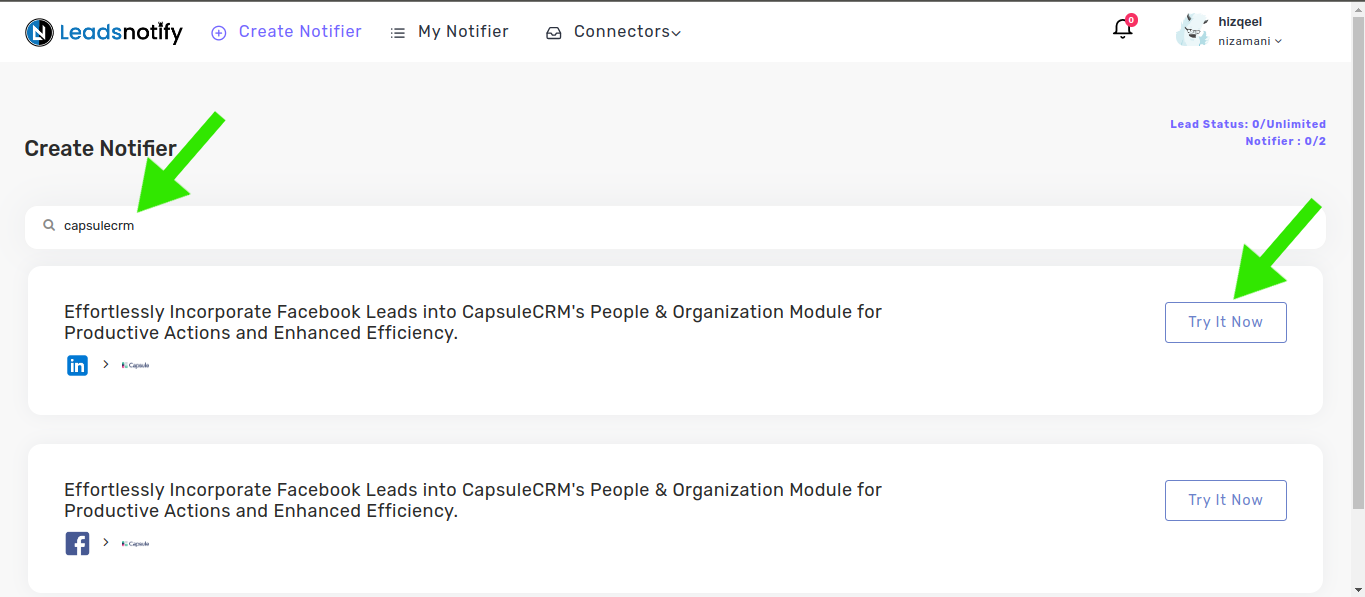
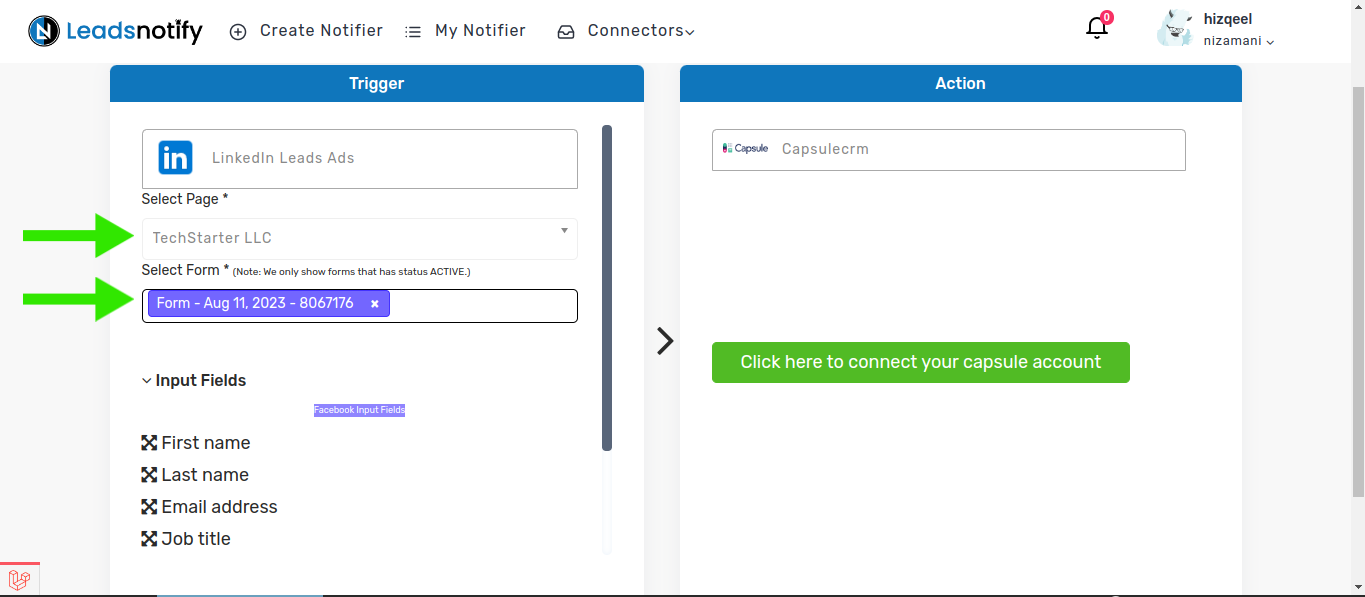
After clicking Try Now, you will see the configuration options for the notifier. The first section allows you to select the LinkedIn page and the forms you want to connect.
Once you select the appropriate instant form, LeadsNotify will display the fields available from that form so you can configure the information that should be sent to Capsule CRM.
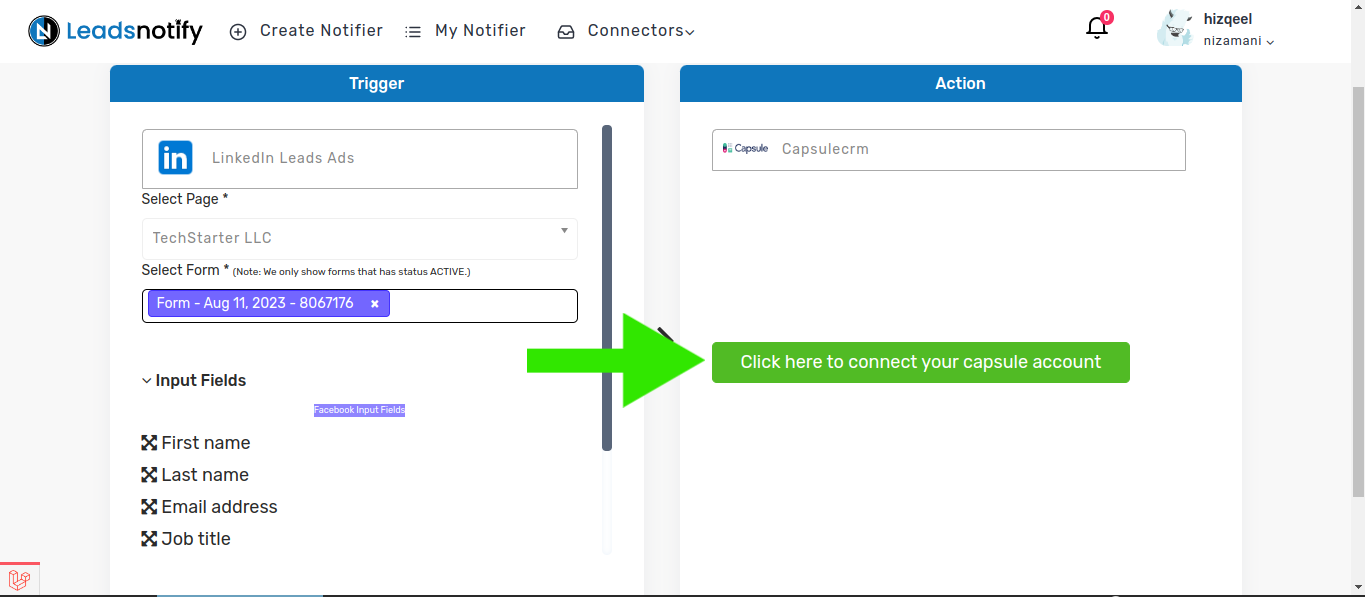
Next, click the green button to connect with Capsule CRM. You will be prompted to log in to your Capsule CRM account and authorize LeadsNotify to connect with your account.
After you grant the required permission, the input fields will appear in the notifier configuration. Review the available fields and make sure the lead information is mapped correctly.
When everything looks correct, click Submit at the bottom of the page to save the notifier.
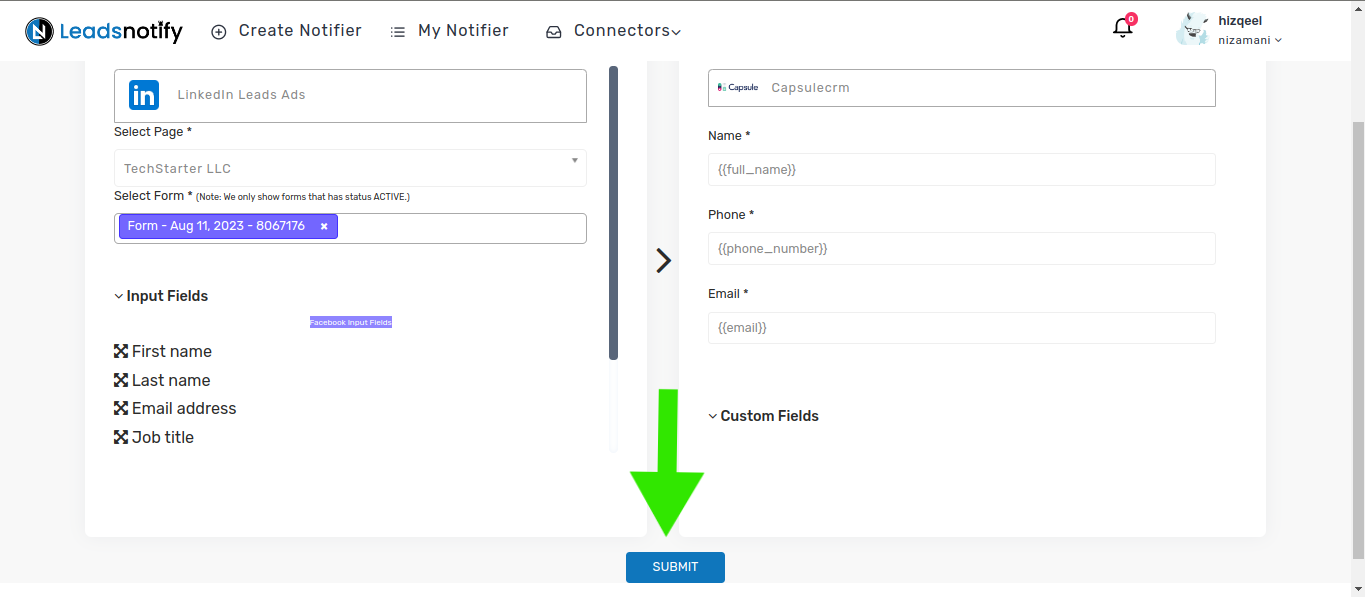
How the LinkedIn to Capsule CRM Automation Works
Once the notifier is configured, the workflow is straightforward:
- A prospect submits a LinkedIn Lead Gen Form.
- LeadsNotify receives the new lead.
- LeadsNotify processes the lead through the configured notifier.
- The lead information is sent to Capsule CRM.
- Your team can then manage the contact and follow up from Capsule CRM.
This removes the need to manually transfer every LinkedIn lead into your CRM and gives your sales team a more consistent lead-management workflow.
How to Test the Capsule CRM LinkedIn Integration
After creating the automation, it is important to test the workflow with a LinkedIn lead before relying on it for live campaigns.
A test helps confirm that the LinkedIn form is connected correctly and that the lead is reaching Capsule CRM as expected.
Step 1: Open LinkedIn Campaign Manager
- Log in and open LinkedIn Campaign Manager.
- Navigate to the Advertise section.
- Select the relevant Campaign Group.
- Select the appropriate Campaign.
- Click the relevant Ad Name.
This will open the ad and its associated Lead Gen Form. In the example below, the form is used to collect lead information.
For testing purposes, the form contains a Subscribe button that allows you to submit a test lead.
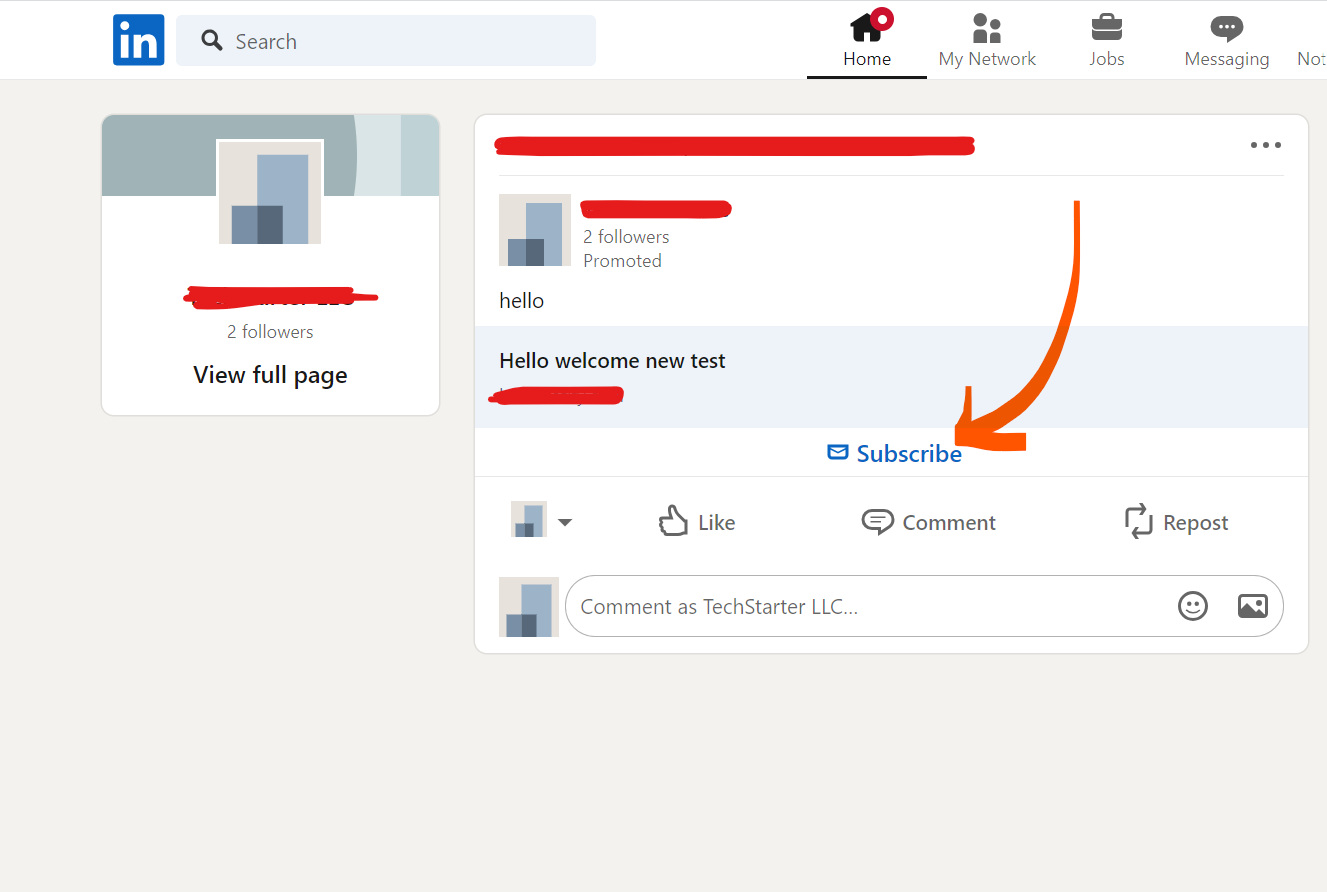
Click the button to open the form. You will then see the fields required to submit the lead, such as the name and email address shown in the example below.
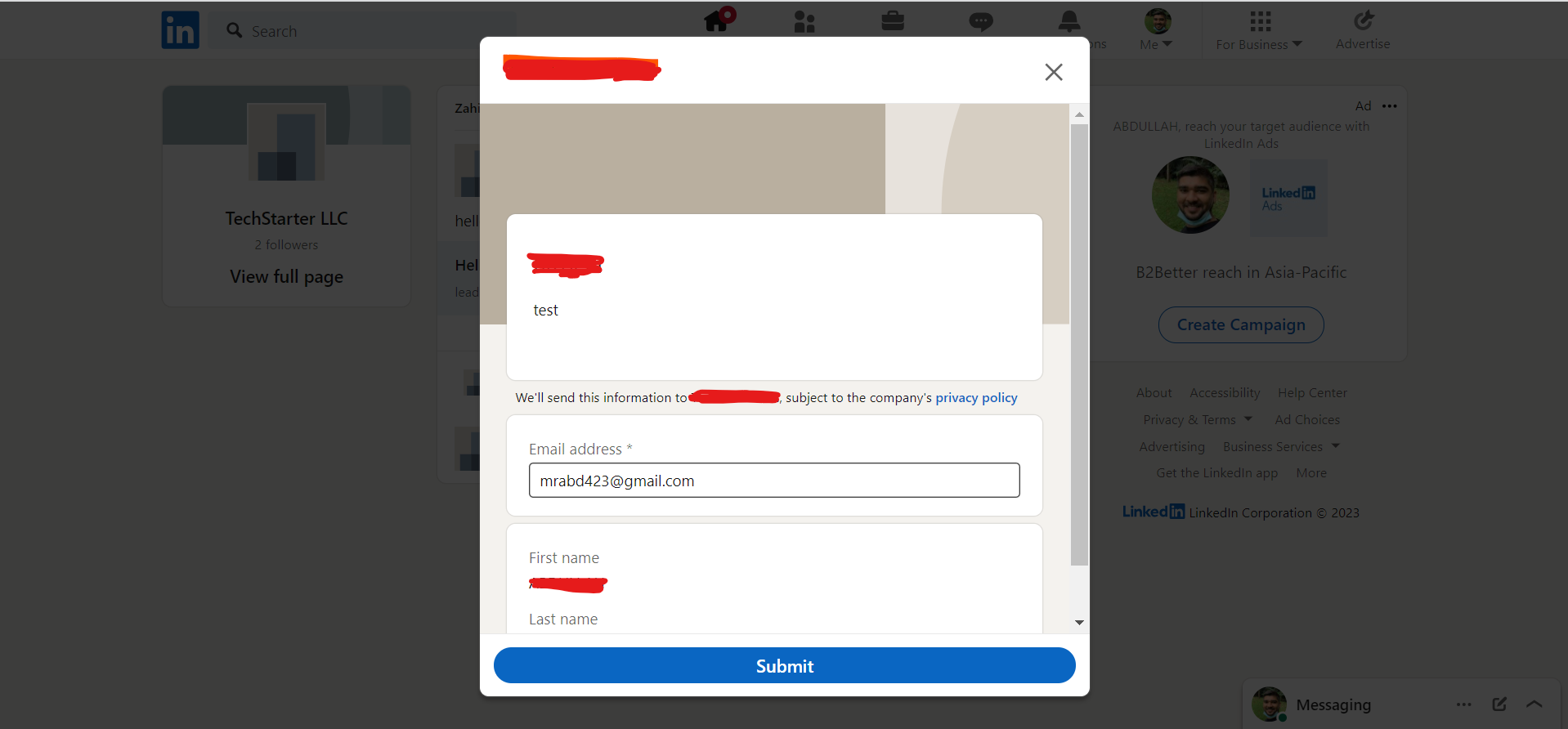
Step 2: Submit the Test Lead
Submit the LinkedIn form with your test information. LeadsNotify should receive the lead and send it through the notifier you created for Capsule CRM.
Step 3: Check Capsule CRM
After submitting the test form, check your Capsule CRM account to confirm that the lead has been received.
If the contact appears in Capsule CRM, the LinkedIn-to-Capsule CRM automation is working as expected.
If the lead does not appear, review the notifier configuration and delivery status in LeadsNotify. You can also contact support@leadsnotify.com for assistance.
Using Capsule CRM for LinkedIn Lead Follow-Up
Sending LinkedIn leads into Capsule CRM is only the first part of the process. Once a lead reaches your CRM, your team can organize the contact, manage the sales opportunity, and continue the follow-up process.
A reliable lead workflow can be especially useful for sales development teams and businesses running LinkedIn marketing campaigns. Instead of downloading or copying leads manually, the sales team can work from the CRM where customer information is already organized.
Best Practices for a LinkedIn and Capsule CRM Workflow
- Test the integration before launching a campaign: Submit a test lead and confirm that it reaches Capsule CRM.
- Check your field mappings: Make sure the information collected by the LinkedIn form is mapped to the appropriate fields in Capsule CRM.
- Monitor failed deliveries: If a lead does not arrive in Capsule CRM, check the delivery information in LeadsNotify.
- Keep your CRM organized: Use consistent contact and sales-pipeline processes so your team can act on new leads quickly.
- Review your automation regularly: Integrations depend on connected services, credentials, permissions, and API behavior, so periodically verify that your workflow is operating correctly.
Frequently Asked Questions
Can I connect LinkedIn leads to Capsule CRM?
Yes. LeadsNotify can be used to create an automation that receives leads from supported LinkedIn Lead Gen Forms and sends them to Capsule CRM.
How does the Capsule CRM LinkedIn integration work?
The workflow connects your LinkedIn lead source to LeadsNotify and then configures Capsule CRM as the destination. When a prospect submits a connected LinkedIn Lead Gen Form, LeadsNotify processes the lead and sends it to Capsule CRM.
Can I test the LinkedIn to Capsule CRM connection?
Yes. You can submit a test lead through your LinkedIn Lead Gen Form and then check Capsule CRM to confirm that the contact was delivered successfully.
Can Capsule CRM help with LinkedIn lead follow-up?
Yes. Once LinkedIn leads are transferred into Capsule CRM, your team can manage those contacts and sales opportunities from the CRM and continue its normal follow-up process.
What should I do if a LinkedIn lead does not appear in Capsule CRM?
First, check that the LinkedIn account, lead form, and Capsule CRM connection are configured correctly. Then review the delivery status in LeadsNotify to identify whether the lead was received and whether the destination accepted it.
Do I have to manually copy LinkedIn leads into Capsule CRM?
No. With an appropriate LeadsNotify notifier, the lead can be transferred automatically from the connected LinkedIn Lead Gen Form to Capsule CRM, reducing manual data entry.
Automate Your LinkedIn Leads with Capsule CRM
Manually moving LinkedIn leads into a CRM can add unnecessary work and create opportunities for data-entry mistakes. Connecting LinkedIn with Capsule CRM through LeadsNotify gives you a more automated way to move new leads into the system your sales team already uses.
The setup requires you to connect your LinkedIn lead source, select Capsule CRM as the destination, authorize the connection, configure the fields, and test the workflow.
If your business relies on LinkedIn lead generation, automating the transfer into Capsule CRM can help your team spend less time moving data and more time following up with potential customers.
Ready to connect your LinkedIn leads with Capsule CRM? Sign up for LeadsNotify and create a Capsule CRM notifier to get started.
Set up a free notification in a few minutes.

Hizqeel Nizamani
Hizqeel Nizamani is a software engineer and backend developer working on CRM integrations, automation, APIs, and lead management systems. At LeadsNotify, he helps build and improve technology that enables businesses to capture, manage, and respond to leads more effectively.
Connect on LinkedIn ↗